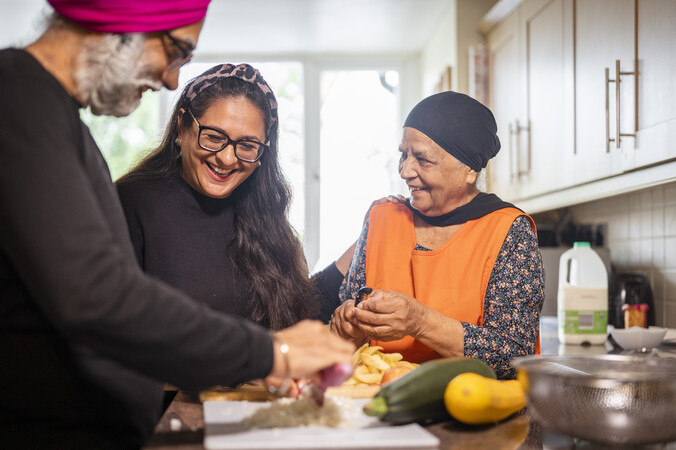
People preparing veg and smiling

Welcome to the Research and Practice Network.

Family and Group Conferencing (FGC) is growing as an approach in adult social care and mental health services.  It offers an inclusive process in which people can plan for their support and/or recovery on their own terms - alongside family, friends and other people that matter to them.

The Research and Practice Network provides a forum for developing practice through learning together and exchanging ideas, experiences and findings from research.

This network is hosted by Community Catalysts CIC.
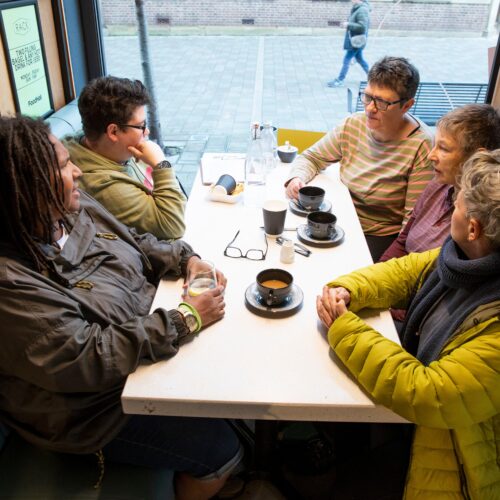
14th October 2025 - Online Webinar and Virtual Gathering

On Tuesday 14th October 2025, Community Catalysts and the University of Birmingham were pleased to host an online event on Family and Group Conferencing for Adults.

The event featured a one-hour webinar followed by a virtual gathering for Research and Practice Network members.

We were delighted to welcome 98 attendees throughout the event who joined from across the UK and beyond.

The webinar section focused on the findings of research by the University of Birmingham. We heard from Professor Jerry Tew and two lived-experience researchers, Kar-Man Au and Katy Evans.

“I have really valued hearing about the impactful work in FGCs and the positive outcomes for the person at the centre and their family. “

“I really valued Katy's insight on the power of the adult person’s voice and their emotions through the FGC process.”


Sean Ahern and Katriona Hartnett (FGC for Adults Managers at London Borough of Camden) joined Nick Sinclair (Programme Director at Community Catalysts) to share about the upcoming ‘Test and Learn Together’ Programme co-hosted by the two organisations. This new programme is aimed at councils who are interested in adopting the FGC for Adults model in a sustainable way and will provide support to design, pilot and embed the approach.

Following the webinar, members and attendees were invited to stay to hear practice examples from:
• Edinburgh Council (Pam Dudgeon) – supporting adults with alcohol and drug issues
• Perth and Kinross Council (Lauren Suttie) – supporting young people transitioning into adulthood
• London Borough of Waltham Forest (Caoimhe McKenna) – as part of their early help offer.

The event was busy with lots of information, engagement and connection across people old and new to FGC for Adults.

There was a real sense of momentum and enthusiasm and we look forward to meeting in person in 2026.

“Thanks so much, great to hear how FGC is flourishing.”

This year's research and practice gathering in London - 8th April 2025

Read about this year's Research and Practice Network Gathering which took place on 8th April in London.

The FGC lived experience blog

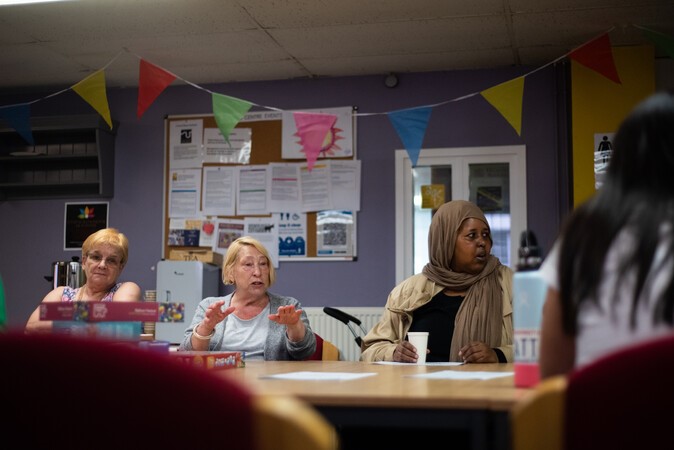
3 women around a meeting table

Welcome to the "Family and Community Group Conference Lived Experienced Practice Notes" blog series, brought to you by Kar Man and Tim. In this series, we will share our insights and experiences from Family and Group  Conferencing (FGC).

Alivia Bray and Lyndsey Taylor of the Adult Mental Health Family Group Conferencing service in Essex talk about the training programme which has been developed there with the aim of sharing the skills and the ethos of FGC, and to demonstrate its place in the provision of collaborative mental healthcare and decision-making as widely as possible.

Dr Lynn Prendergast, Holistic Reach Consultancy Ltd and
Jo Shead, Senior Practitioner, Essex Perinatal Mental Health Service talk about the challenge of delivering a consistent and effective service in the everchanging landscape of health and social care.

This year's Research and Practice Network Gathering - 8th April 2025

A gathering of minds in London

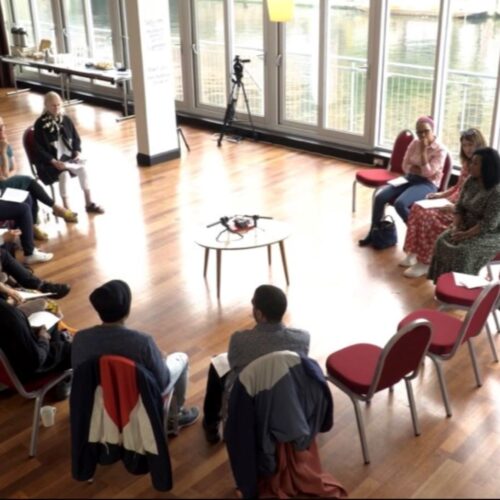
On Tuesday 8th April, people from across the UK with a passion for Family and Group Conferencing (FGC) for Adults descended on north London for this year’s Research and Practice Network gathering.

People joined us from places as far and wide as Edinburgh, Scarborough, Essex and Hampshire as well as many London Boroughs to hear from a range of voices championing the impact that the approach can make in the lives of local people.

Members came from the worlds of academia, health care, social work practice, training provision and the civil service. Some have adopted the approach for some time and shared how it has become a mainstay, supporting people to have a voice and be in control of their lives. Others have newly adopted the approach within the last year, and many were exploring the model and came keen to learn more.

What stood out was the breadth of applications of the approach across health and social care systems and beyond. We had examples of the model being used to fantastic effect in early help, mental health services, integrated approaches, support planning, perinatal support and assisting people at the end of life.

We explored together the potential for the model beyond these boundaries – with partners in community and voluntary sector, support providers and criminal justice – and we heard of some possible work in these areas.

A synopsis of the day

We opened by hearing from Nick Sinclair (Programme Director at Community Catalysts) about his interest in the approach as a tool to make personalisation real by giving power back to people and enabling them to access the support they want to live life their way. Community Catalysts are the hosts of the network and are delighted to be supporting the movement.

We watched a new video featuring many voices from the London Borough of Camden where the model is making a difference for local people.

Professor Jerry Tew (University of Birmingham) then shared the findings from research aiming to define the model and capture current good practice. He shared the working Programme Theory highlighting the contextual factors and the mechanisms and processes that make the approach a powerful tool that can contribute to a range of potential positive outcomes. Jerry spoke of his long history with the approach, his role in forming the network and supporting research and vision to see FGC thrive.

Tim Fisher (National Practice Lead at Kinship and formerly at Camden) did a wonderful job chairing two panel discussions with a range of voices from the network.

Panel 1 heard from real powerhouses from the FGC world: Dr Lynn Prendergast (Essex Partnership University NHS Foundation Trust), Annie Ho (Independent Social Worker), Debbie Burns (CEO, Daybreak), Michaela Calvert (Camden resident) and Pete Marsh (University of Sheffield). Each thoughtfully and insightfully shared their vast experience of the how the approach is making a difference and were invited to look ahead to the future of the model.

Panel 2 was a deeper dive into London Borough of Camden as a mature programme and consisted of Jamie Spencer, Katriona Hartnett, Parvin Zaman, Steve and Sean Ahern. Tim invited each panel member to help to ‘bake a cake’ in celebration of Camden’s recent Outstanding award following their CQC assessment. Each brought insights from their experience from their own lives, practice as a Coordinator or in leadership to share the ingredients needed to see FGC embedded. It certainly made for a tasty creation!

In the afternoon, we heard two brilliantly different practice examples.

Katharine Timson-Sheppard and Joanne Shed talked us through how the model is used within Essex Partnership University Trust (EPUT). Essex is the longest running example of the model supporting adults in the UK and is a great showcase of how the NHS can be at the forefront of supporting person-centred planning in recovery and support within mental health services. The presentation set out clearly how FGC is cost effective and making long lasting impact, supporting over 120 families each year. Jo talked about the extension of the approach into perinatal support and how beautifully aligned the model is with NHS England’s three principles for perinatal support. Case studies brought to life the way the approach is enabling people to regain control of their lives, to connect with others and is keeping people safe and well.

Caoimhe McKenna from the London Borough of Waltham Forest shared how the early help team have adopted the FGC approach and are supporting local citizens to draw on the resources and support of their networks to keep well and to prevent crises. It was impressive to see the scope of connections that the small team are making across directorates to ensure that people are offered an FGC at the earliest opportunity by linking with partners in housing, advice services and through community drop-ins.

To end the day, Jerry Tew and Nick Sinclair opened up discussions around quality standards and development support to grow and strengthen the network. Jerry shared the basis of new standards and guidance due to be released to support areas to reflect on their practice and ensure that the model remains true to its design. Nick shared the early work of Community Catalysts to develop an offer to support new areas to adopt and embed the approach for the first time.

Network members were clear that gathering together to connect and learn from each other was really valued and would like to introduce a virtual gathering between the annual face-to-face events. Watch this space for news of a virtual event in October which will be open to anyone within the FGC space or interested in exploring it.

If you would like a discussion about how the FGC approach could support adults in your area, please reach out to us via info@fgcforadults.org.uk and we would be more than happy to chat.

You can also sign up to our Family and Group conferencing for adults newsletter.