Micky and Tony’s story – A Local Area Coordination narrative
Summary…
Micky, the main carer for her husband Tony who lives with dementia, was introduced to Local Area Coordinator Lisa after appearing overwhelmed, isolated, and exhausted while attending a friendship café alone. Through slow, trust‑based support in familiar settings, space was created for Micky to talk honestly about her struggles, and for Tony’s identity as a former firefighter to be seen and valued. Conversations focused on what a “good life” looked like for them now, with Micky leading on decisions. This led to a meaningful reconnection with the fire service when a fire crew visited Tony at home, reigniting his pride and sense of belonging, while also making practical safety improvements. The visit had a profound emotional impact on both Tony and Micky, and equally helped to strengthen collaborative working between community services.
As the relationship continued, Micky gradually felt able to accept further help at her own pace, leading to practical improvements that transformed daily life. Support included assistance with home adaptations including a stairlift and alarm pager, respite through live‑in carers, and the development of a sustainable future care package. These changes reduced physical and emotional strain, improved dignity for Tony, and helped Micky regain confidence, independence, and wellbeing.
The story illustrates how by listening deeply, working relationally, and introducing support preventatively rather than in crisis, Local Area Coordination can create lasting, person‑led change for individuals and families, while also reducing pressure on services.
Read the full story below…
“I first met Michaela, who prefers to be known as “Micky”, following an introduction from Suzi Morgan, the Client Services Manager at Lincroft Dementia Care Home. Micky had been attending the Friendship Café at Lincroft with her husband, Tony, who lives with dementia. Tony is a former firefighter, and Micky is his main carer, with very little support around her.
At the time of the introduction, Micky was also receiving support from MIND alongside her caring role. Suzi shared her concern that Micky had recently attended the café alone. She appeared visibly overwhelmed, exhausted, and unsure where to turn. When Micky spoke about this later, she described feeling increasingly isolated and struggling to cope with the pressures of caring on her own.
Micky’s hope in connecting with Local Area Coordination was simple but deeply important – she wanted space to talk honestly about how things were at home, and to explore what might help her and Tony to feel more supported, connected, and less alone.
With Micky’s consent, we first met at Lincroft. This was a familiar and safe environment for her, somewhere she already felt comfortable. From there, the relationship developed slowly and naturally. I later visited Micky at home which offered a different space, quieter and more personal, where she felt able to speak more openly about the realities of day‑to‑day life.
Meeting Tony in his own home was particularly important. It allowed me to understand not just his needs, but his identity. Talking with him and seeing his memorabilia, it became clear how proud he was of his 30‑year career as a firefighter. This wasn’t just part of his past, it was central to who he still is.
Our conversations were unhurried and grounded in what mattered most to Micky and Tony. Using Local Area Coordination principles, we explored what a “good life” looked like for them now, not in abstract terms, but in very human ones.
We spoke about Tony’s strong sense of identity and citizenship through his service as a firefighter, the relationships that still brought meaning to their lives, and the importance of Micky feeling listened to as the expert in her husband’s needs. We talked about choice and control, ensuring that Micky was always leading the conversations about what felt right and when.
As trust grew, a natural idea emerged: reconnecting Tony with the fire service. Kidlington Fire Station held many memories for him, and simply talking about it lit something up for him.
With Micky and Tony’s agreement, I contacted Kidlington Fire Station to explain Tony’s history and to explore whether a visit might be possible. Shortly afterwards, Tony experienced two falls and could no longer travel. When I updated the station managers, their response was immediate and generous. Without hesitation, they offered to come to Tony instead.
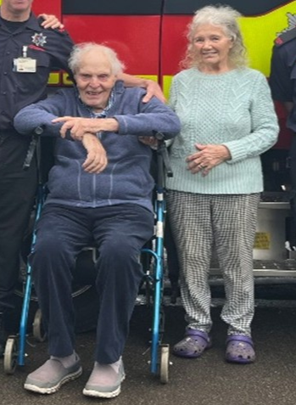
On 1st December, a fire crew arrived outside Micky and Tony’s home along with a fire engine. Inside the house, they spent time talking with Tony, looking through his memorabilia, and sharing stories. They also checked the smoke alarms, replaced a faulty one, installed an additional alarm, and shared information about the Fire Fighters Charity, offering reassurance about future respite support if it was ever needed.
The impact of this visit was profound.
For Tony, it reignited a vital part of who he is. He felt recognised, valued, and proud. Despite mobility difficulties, he was motivated to go outside with his walker, something he hadn’t done in weeks.
For Micky, the experience brought a deep sense of support. She shared that it was the first time someone had offered help in such a thoughtful and personal way. Her feelings of isolation eased, and she felt reassured that practical and emotional support was available when needed.
The ripple effects extended beyond the household. The fire service demonstrated exceptional compassion and community spirit towards one of their own. Stronger working relationships developed between Local Area Coordination, Lincroft, Kidlington Fire Station, MIND, and local GP services.
Micky had already been working with MIND, and they later contacted me after recognising the progress she was making through our community‑based work. This prompted closer collaboration between MIND and Local Area Coordination, ensuring that support was aligned rather than duplicated. Over time, this also strengthened connections with local GPs, helping everyone involved feel reassured that Micky’s non‑medical needs were being addressed.
This joined‑up approach improved communication, prevented escalation, and reduced unnecessary pressure on GP appointments and mental health services, thus saving time, resources, and emotional energy, while also improving outcomes for Micky and Tony.
More recently, as our relationship has continued, Micky felt ready to explore further support. I linked her up with Occupational Therapy to look at additional help within the home. I often think of this work as holding a deck of cards representing different services and forms of support, but not placing them all on the table at once. Instead, we keep them ready, and use them when Micky feels the time is right.
This approach means support is meaningful, welcomed, and more likely to last. It also reduces pressure on services, as help is introduced proactively and preventatively, rather than in response to crisis.
Looking back, this story happened because of the way Local Area Coordination works: taking time, listening deeply, and starting with what matters to people. It was possible because of trusted relationships in the community, flexibility, creativity, and partners working together with kindness and shared purpose, outside of rigid thresholds and transactional ‘referrals’.
Without Local Area Coordination, Micky’s isolation may have deepened, Tony may have missed a vital reconnection with his identity, a faulty smoke alarm may have gone unnoticed, and services may have continued working in parallel rather than together.
This story does not feel finished. It feels like the first chapter.
Next, we will continue meeting with Micky to explore what a good life looks like going forward, strengthen her community connections, and seek further meaningful ways for Tony to stay connected to what he loves. Alongside this, we will continue nurturing relationships with Lincroft, the fire service, MIND, and local GPs, not just for Micky and Tony, but for others who may benefit in the future.
The next chapter begins…
The story of Micky and Tony doesn’t end here. Instead, a new chapter has begun: one shaped by growing confidence, trust, and Micky’s increasing ability to put her own wellbeing alongside Tony’s care.
As our work together continued, Micky felt able to share something deeply personal. She explained that she had been limiting herself to one shower a week, not because she didn’t want to care for herself, but because she was worried about water usage while caring for Tony and the potential cost. Like many carers, Micky had quietly placed her own needs to one side.
Together, we contacted Thames Water to explore what help might be available. That conversation brought immediate reassurance. Afterwards, Micky shared that she now felt able to take better care of herself as a carer, beginning to put her own needs first again. While seemingly small, this marked an important shift in Micky’s wellbeing and sense of self‑worth.
As her confidence grew, Micky found the strength to reach out for further help. She re‑engaged with the Occupational Therapy team, and, through Cherwell District Council, a home assessment led to a £5,000 contribution grant towards a stairlift. This will significantly reduce physical strain, improve safety, and support both Micky and Tony to manage daily life with greater ease.
Following further discussion with Occupational Therapy, Micky was also provided with an alarm pager that she now wears. Should Tony need her or experience a fall, Micky is alerted immediately. This has been transformative. For the first time, Micky feels able to step into the garden, something that brings her calm, grounding, and improved mental health without fear or constant anxiety about leaving Tony’s side.
Micky has also shown great strength in accepting more practical support. A live‑in carers package for two weeks was arranged, allowing her vital rest and reflection. While this level of care would not be financially sustainable long‑term, it has given Micky the opportunity to understand what works well and what doesn’t.
During this time, I have remained in close contact with the family, increasing visits and walking alongside them to reflect on what feels helpful, affordable, and sustainable. Together, we are setting goals for a future care package that supports Micky and Tony without overwhelming them or removing Micky’s sense of control.
Throughout, Micky has remained firmly in the driving seat. She continues to exercise her natural authority, recognising what support best fits her situation and when she feels ready to accept it. Nothing has been rushed or imposed.
Looking ahead, I have drawn on a strong relationship with Home Instead who have offered to visit Micky at home and, in time, work with her to develop a care package that is realistic, affordable, and sustainable.
In the coming weeks, Micky will begin leaving the house more regularly, knowing that Tony will be supported by professionally trained carers with expertise in manual handling to assist with washing and dressing. Previously, when Micky supported Tony with personal care herself, he would become impatient and distressed, often leading to arguments. With professional support, Tony feels he has greater dignity, and Micky is able to begin her mornings at a slower, calmer pace, thus supporting better wellbeing for the both of them.
This chapter highlights the value of Local Area Coordination. By working relationally, staying alongside the family, and coordinating support across multiple services, both professionally and personally, my role as a LAC has helped reduce duplication, prevent escalation, and ensure help is introduced at the right time.
This approach saves services time and money, avoids crisis‑led interventions, and creates meaningful, lasting change in people’s lives.
And so, the story continues… not as a single intervention, but as an evolving journey, built on trust, dignity, and the belief that people thrive when they are supported at their own pace.”
by Lisa Sweeting-White, Local Area Coordinator for Kidlington (Oxfordshire)