
Alex Fox, CEO at Community Catalysts, introduces the report, sharing the highlights of our work across programmes.
We help people to use their talents to start and run small enterprises and community businesses that support and care for other local people. This is known as community micro-enterprise development.
The Community Micro-enterprise Development Programme is designed around quality standards and assurance. Our Doing it Right Standards and Advice Framework ensure that community micro-enterprises that are set up are safe, legal, personalised and sustainable.
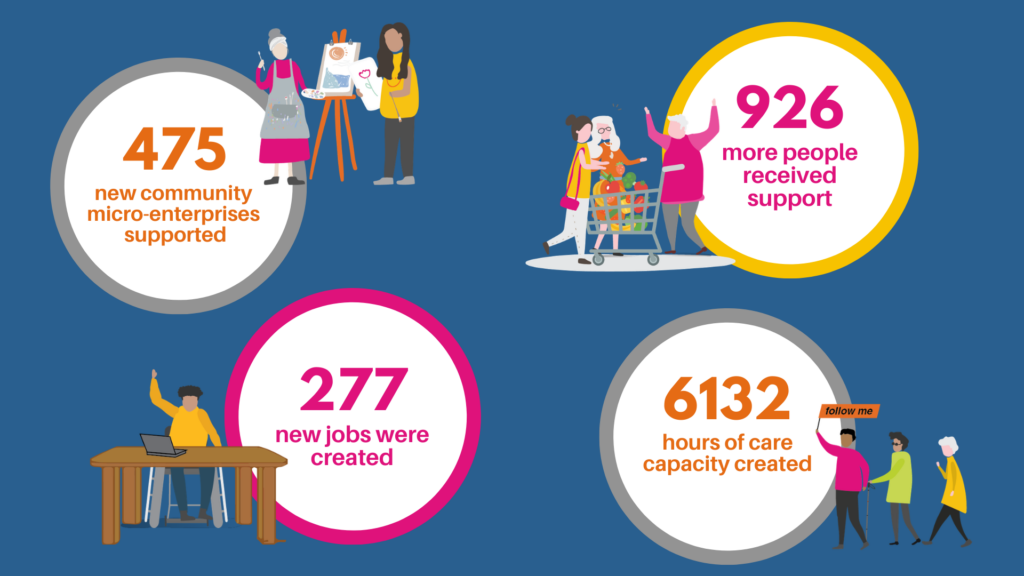
Below are some of our highlights in numbers, along with key achievements.
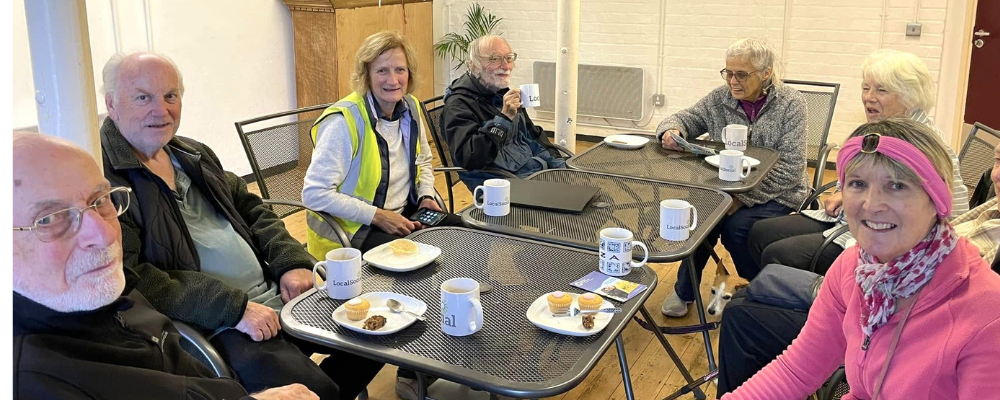
Community Micro-enterprise Development supports valuable connections to grow between those who run micro-enterprises and other people, professionals and organisations. They act as the ‘catalysts’ of change in how care and support is delivered in local areas.
In Hertfordshire, three community micro-enterprises and a local housing association worked together to breathe new life into a community space.
In Cheshire West, Pat’s life was changed when a social worker and community micro-enterprise came together to help her live a good life.
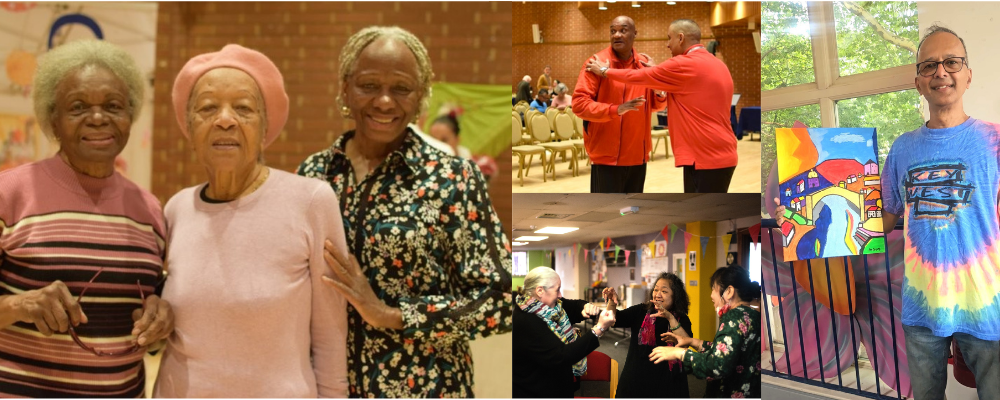
We took the opportunity to celebrate and showcase the variety of care and support in the Royal Borough of Kensington (RBKC) and Westminster, which included music therapy, yoga, drama, dancing and creative arts. It’s just one example of how our projects create diverse marketplaces in local areas.
The Royal Borough of Kensington and Chelsea’s Social Investment Impact Report shows that the Community Micro-enterprise Development is improving people’s lives and wellbeing across the area, as well as providing economic and wider social benefits.
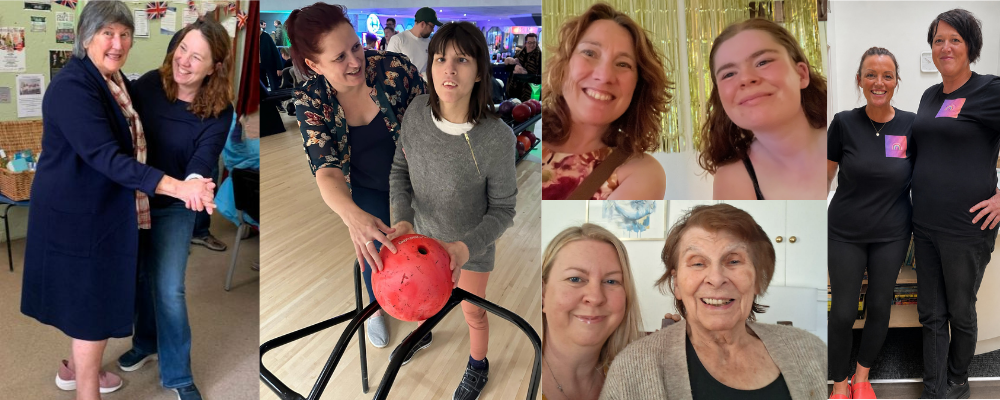
In Suffolk, the care landscape has grown in diversity, resilience and dynamism, with choice and personalisation at the forefront. This is giving people local, flexible and meaningful care alternatives.
Read how Flourish2Thrive, a specialist community micro-enterprise helps people live fulfilling, independent lives in their own homes and community.
Or how Cara was able to end the receipt of universal credit payments and generate an income doing something she loved.
“Since launching in the Waveney district before expanding across the whole of the county, the Community Catalysts initiative has brought meaningful change by promoting local, community-based care options.”
Cllr Beccy Hopfensperger
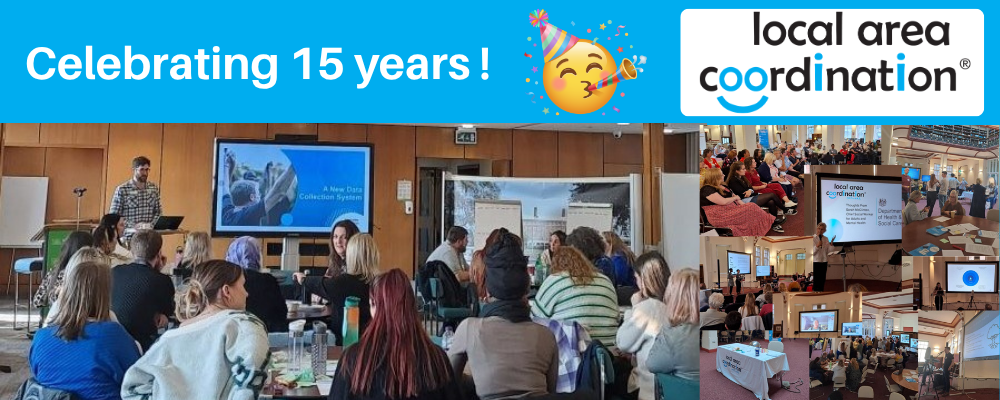
For those 15 years, through Local Area Coordination, we’ve been doing what the NHS 10-year Health Plan is calling for – building trust, walking alongside people, and helping people find their own solutions to what can often be perceived as very difficult health and social care challenges.
Local Area Coordination is a relational approach that builds on what’s strong in people’s lives and communities. Local Area Coordinators are employed by councils, based in communities and are recruited together with the input of local people. Local Area Coordinators proactively meet with people and families in their neighbourhoods, building trust and connection with people over time. This creates the conditions where people feel able to open up about what a good life would look like for them and any current issues and barriers that are stopping that, before planning the actions needed to make change happen.
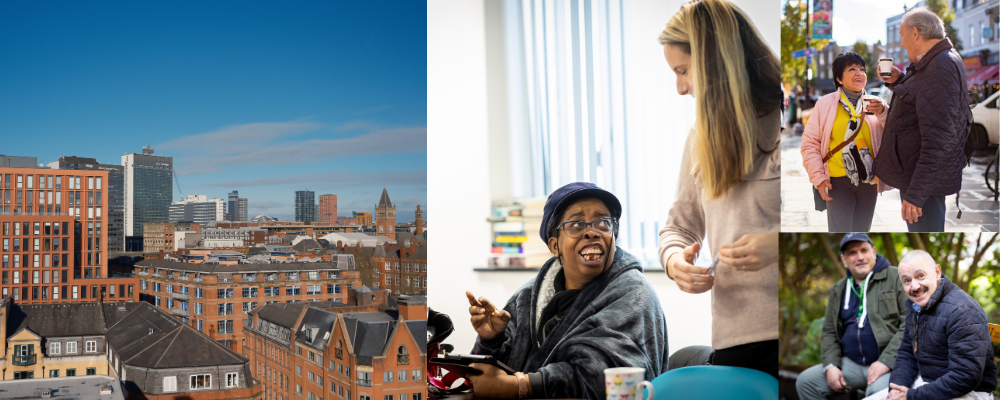
As part of the Greater Manchester Live More project and in partnership with Shared Lives Plus, we provided targeted support aimed at increasing the number of new Shared Lives carers in Oldham, Stockport and Tameside.
“The support you and your colleague have provided in such a short period of time has initiated promotion, enthusiasm and ideas. I’m sure the connections you have made on our behalf will support us to develop our skills and help grow our Shared Lives service. Thank you.”
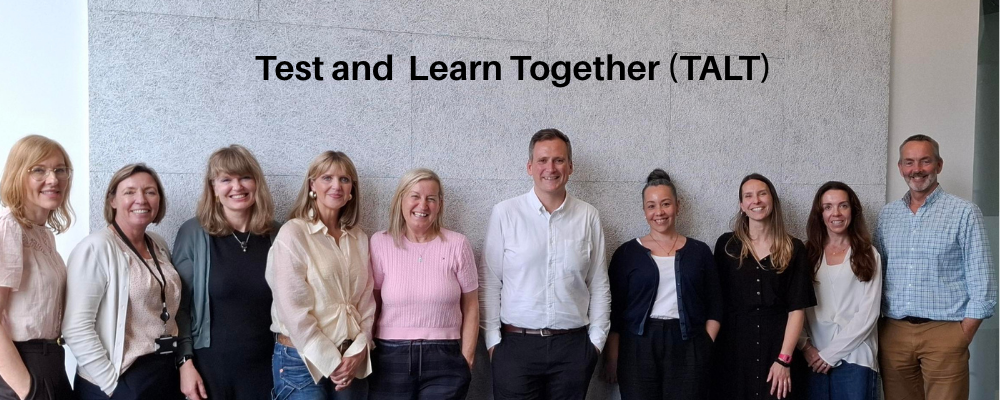
Family and Group Conferencing is an inclusive approach where people can plan for their support and / or recovery on their own terms, alongside family, friends and other people that matter to them.
We are building a network of areas with an innovative Family and Group Conferencing for Adults programme – Test and Learn Together. This programme will bring together a group of councils who will adopt the model for adults for the first time.
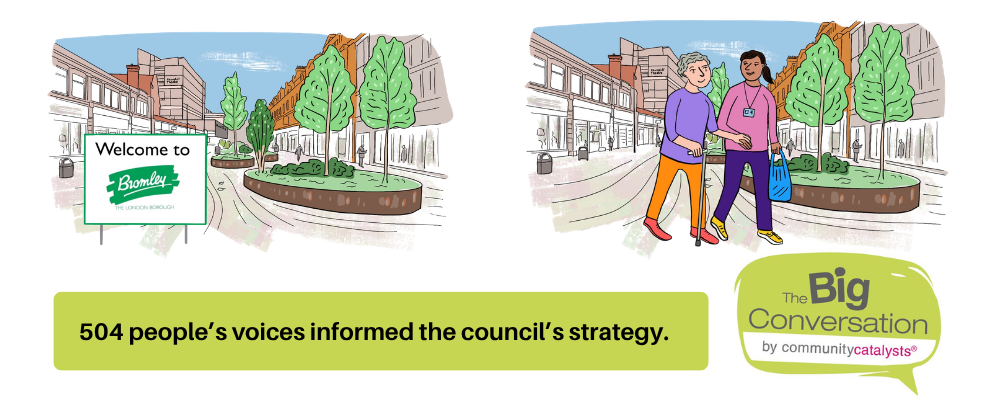
Our Big Conversation in Bromley heard from 504 older people which gave the council and ICS a picture of community activities in Bromley as understood and communicated by residents. The report of the findings, including the challenges and opportunities, have informed the council’s commissioning strategy for older people’s care.
The Big Conversation is an approach which supports organisations to have quality and insightful conversations with people in communities, to inform action plans for change.
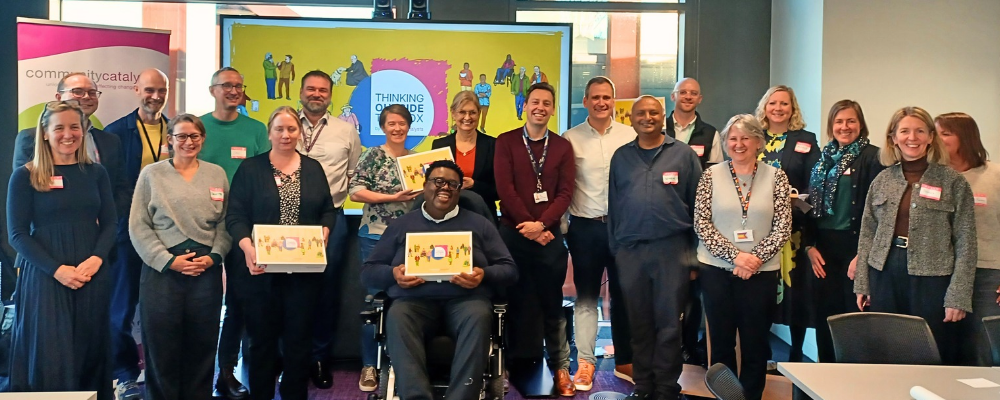
Thinking Outside the Box is a creative and immersive workshop and tool to support people challenge the way they think about the strengths in their neighbourhoods – people, networks and local resources.
Over 2025-26 we ran workshops in Camden, Oxfordshire, Liverpool and York that helped over 120 people to rethink care and support as something that emerges from connection, purpose and belonging. The workshops framed formal support as a back-up or enabler of good lives, rather than the first port of call. They sparked debate, conversation and fresh perspectives on supporting healthier, more connected lives and communities.
The Camden event was supported by Dr Clenton Farquharson CBE; Sally Warren, Director General for Adult Social Care (DHSC); and Sarah McClinton, Chief Social Work Worker for Adults in England.
We also brought together over 100 people at our Neighbourhoods for Living Well event in partnership with the UK National Innovation Centre for Ageing (NICA) in Newcastle. It gave participants an opportunity to hear more about approaches that are helping people live well, and to build relationships with others working in this space.
“Great sessions run by experienced and knowledgeable people”.
“This was an enjoyable and thought-provoking training. The balance of the session was great”.
Workshop participants
The NHS 10-Year Plan sets a new target to ‘at least double the number of people offered a PHB by 2028/29, offer one million people a PHB by 2030…’ . We produced a report for the Cheshire and Merseyside ICS that highlighted opportunities and recommendations around Personal Health Budgets that can help meet these targets. It also explores challenges and areas for improvement in the expansion of Personal Health Budgets (PHBs). The findings can be used to inform other areas.
A big thanks to all our partners and supporters! We wouldn’t achieve the things we do without you.